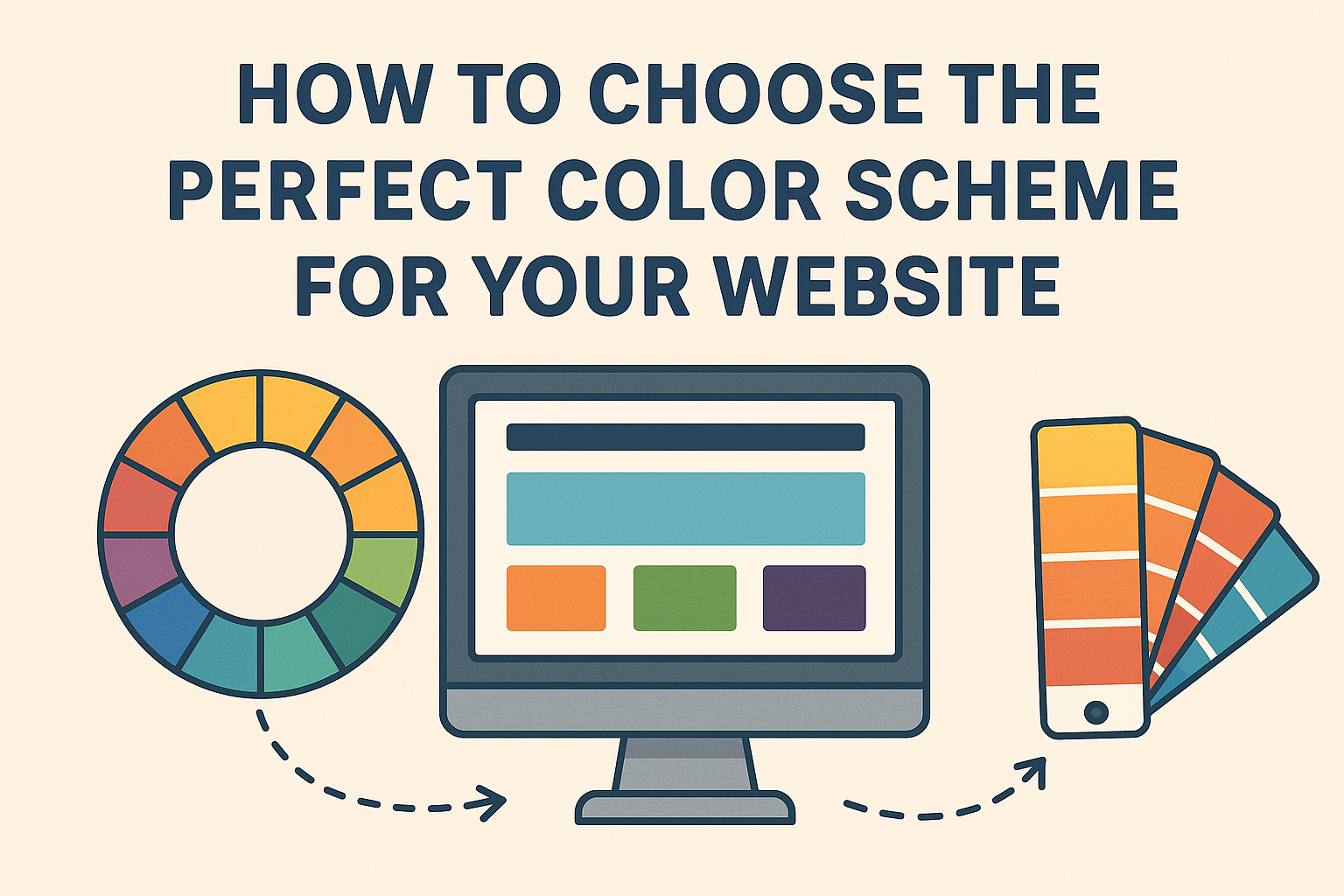
Selecting the right color scheme for your website is crucial. The colors you choose will affect not only the aesthetics but also the functionality and user experience. A well-thought-out color scheme can enhance readability, evoke emotions, and drive conversions. Here’s a comprehensive guide to help you choose the perfect color scheme for your website.
How to Choose the Perfect Color Scheme for Your Website
Understand Color Psychology
- Colors evoke emotions and convey messages. Understanding color psychology can help you choose colors that align with your brand’s message and values.
- Red: Passion, excitement, urgency.
- Blue: Trust, calm, professionalism.
- Green: Growth, health, tranquility.
- Yellow: Optimism, energy, attention.
- Purple: Luxury, creativity, wisdom.
- Black: Sophistication, elegance, power.
- White: Simplicity, cleanliness, purity.
Choose colors that resonate with the feelings you want to evoke in your audience.
Know Your Brand Identity
Your website’s color scheme should reflect your brand identity. Consider your brand’s values, target audience, and the message you want to communicate. If your brand is fun and playful, opt for bright, vibrant colors. For a more professional and serious brand, go with neutral and muted tones.
Consider Your Audience
Different colors appeal to different demographics. Research your target audience to understand their preferences and cultural associations with colors. For instance, younger audiences might prefer bolder colors, while older audiences might favor more subdued hues.
Use a Color Wheel
A color wheel is a valuable tool for creating harmonious color schemes. Here are a few color scheme options you can create using a color wheel:
Monochromatic: Variations of a single color.
Analogous: Colors that are next to each other on the color wheel.
Complementary: Colors that are opposite each other on the color wheel.
Triadic: Three colors that are evenly spaced around the color wheel.
Tetradic: Four colors forming a rectangle on the color wheel.
Each scheme offers a different aesthetic, so choose one that best fits your brand and design needs.
Use Online Tools
Several online tools can help you generate and test color schemes. Websites like Adobe Color, Colors, and Color Hunt provide a range of palettes and customization options. These tools can save time and provide inspiration when selecting your colors.
Test for Accessibility
Ensure your color scheme is accessible to all users, including those with visual impairments. Use tools like the WebAIM Contrast Checker to verify that your text and background colors have sufficient contrast. Accessibility should be a priority to make your website inclusive and user-friendly.
Limit Your Palette
While it might be tempting to use many colors, a limited palette usually works best. Stick to 2-4 primary colors to maintain a cohesive and professional look. Use additional colors sparingly for accents or highlights.
Consider the Emotional Journey
Think about the emotional journey you want your visitors to experience. Different colors can be used to guide users through your site. For instance, a bold color can highlight calls to action, while a calm, neutral background keeps the focus on your content.
Stay Consistent
Consistency is key in web design. Ensure that your chosen color scheme is applied uniformly across your entire website. This includes buttons, links, headers, and footers. Consistent use of color enhances brand recognition and creates a seamless user experience.
Seek Feedback
Before finalizing your color scheme, seek feedback from others. Share your design with colleagues, friends, or even potential users to get their input. Constructive feedback can help you make informed decisions and improve your color choices.
Conclusion
Choosing the perfect color scheme for your website involves a blend of art and science. By understanding color psychology, aligning with your brand identity, considering your audience, and utilizing design tools, you can create a visually appealing and effective color scheme. Remember to prioritize accessibility, limit your palette, and stay consistent to ensure a cohesive and engaging user experience. With careful consideration and a bit of creativity, you can select colors that enhance your website and leave a lasting impression on your visitors.